Kashmiri Pampore Mongra (Kong) vs Iranian Sargol & Spanish Coupe Saffron: Botanical & ISO 3632 Guide
Why Pampore's 1,610-meter Himalayan karewa alluvium produces thicker crimson stigmas and higher per-strand Crocin potency than lowland commercial saffron.
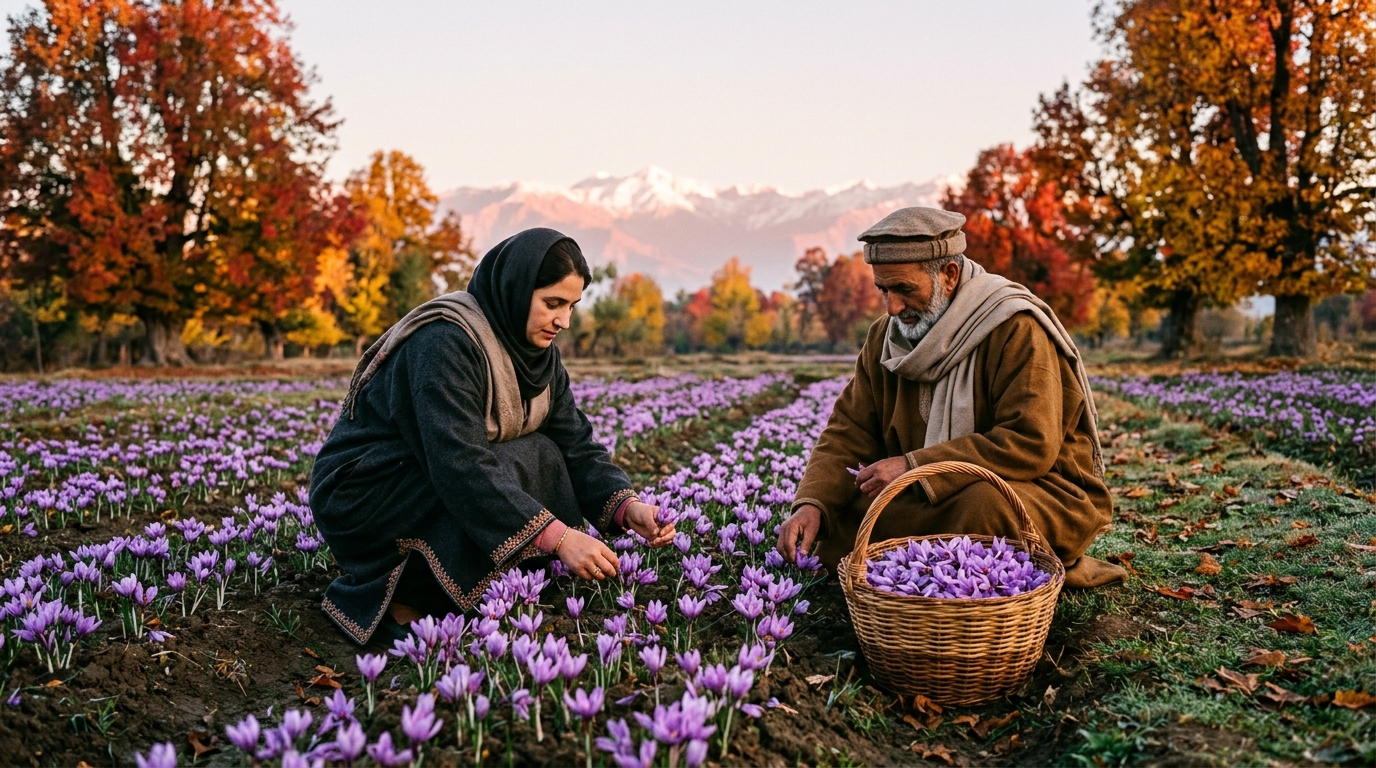
Pampore's 1,610-Meter Karewa Advantage: Unlike irrigated lowland saffron basins, Kashmiri Kong grows on Pampore's ancient elevated karewa plateaus (locally called Wudur)—well-drained glacial-lacustrine silt-loam terraces sitting 1,610 meters above sea level in the Kashmir Valley. Cold October mountain nights paired with crisp Himalayan UV daylight concentrate carotenoid pigments inside the stigma prior to dawn harvest.
Mongra vs Lacha vs Sargol vs Coupe: Within saffron grading, cut discipline determines purity per gram. Lacha (or Spanish Rio/Mancha grades) leaves portions of the pale yellow floral style attached to the red stigma; that yellow style contributes dead weight with virtually zero Crocin colour or Safranal aroma. Iranian Sargol and Spanish Coupe trim closer to the crimson stigma, whereas Kashmiri Mongra (detached whole crimson stigmas from Pampore's large-blossom ecotype) is prized for thick, broad, dark-ruby trumpet heads with zero yellow floral style.
Per-Strand Culinary Potency & True Cost Per Cup: Under ISO 3632-2 Category I standards, saffron must exceed a Crocin colouring strength of 200 at 440 nm. Pampore Mongra lots curated by ZAFORA routinely assay around Crocin 235–245 (Lot ZAF-KS-2026-014 measures Crocin 238, Picrocrocin 91, Safranal 34 at 9.4% dry moisture). Because each thick Kashmiri stigma carries denser pigment and volatile oil, 4 to 6 strands suffice for a generous cup of Kahwa or Kesar Doodh—yielding 25 to 30 infusions from a single 1.00 g flacon (~₹60 per cup in India at ₹1,799).
Single-Lot Custody Over Anonymous Blending: Much of the global spice trade blends multi-country harvests into bulk tins before re-exporting under generic regional labels. ZAFORA maintains direct single-harvest Pampore custody, seals strictly 1.00 g net weight in inert borosilicate glass away from light and humidity, and binds every coffret to an immutable public Batch Passport.
Inspect Batch ZAF-KS-2026-014 or Acquire Signature 1.00 g Coffret
Why harvest timing on the 1,600-meter karewa plateaus protects volatile safranal before the Himalayan sun rises.
A collector's plain-language guide to reading Crocin, Picrocrocin, and Safranal laboratory values—and what they do and do not establish.
Visualizing 480 crimson strands—how to bloom saffron at 70°C and why a single gram flavours twenty-five memorable tables.
Five objective physical, chemical, and ISO 3632 tests to distinguish genuine Pampore Mongra saffron from dyed corn silk, safflower, and sugar-weighted threads.